$50 gives $60
No expiration$50 buys $60 of repair credit.
$50 of credit for $50fund the lab
Every product on this site. The software. The shop itself. Designed and built self-funded, in Longmont, Colorado. Here is the honest account: what almost no money produced, and what real money unlocks.
fund the lab
A repair shop in Longmont, Colorado that designs its own hardware, writes its own software, and fixes your stuff. $5,000 equips it for real: every item named, every dollar traceable. Any amount, from $1.
already built
No investors. No funding rounds. A repair bench's budget and a lot of late nights. Already standing:
what money unlocks
None of this is a promise with a date on it. It's the plan, in order, as we see it today:
These are aims. Money makes them possible. It does not make them instant, and we'll say so the whole way.
three doors
Back the bench at any amount, claim a founding-builder spot on a hardware lane, or buy repair credit with bonus built in. Every dollar on this page buys a specific, named thing.
why our own checkout
Stripe handles the card, the same checkout the repair shop already runs. We never see and never save your card number, and every dollar minus the standard card fee lands on the bench. No platform sits between you and the work. We know exactly who backed which line, so we can give back when we can, founding rewards the Kickstarter way. And like everything else at Tomasetti Tech, we built the backing system ourselves.
"I'm a businessman at heart. I just hate the way the electronics business is run, so I built a shop that runs the other way." Tj
Counted against the $5,000 goal
$3,900 funds every item on the list below. The last $1,100 is the parts float that keeps repairs moving while the tools arrive.
Think this deserves to exist? Share it · Facebook · Email · Copy link
Any amount, from $1. Keep it simple, or pick a lane below.
the receipts


This software runs the shop today, written at this bench. The next tools get built the same way.
the ladder
Every rung is a real item at a real price, named before a dollar arrives. It is the order the bench buys things in.
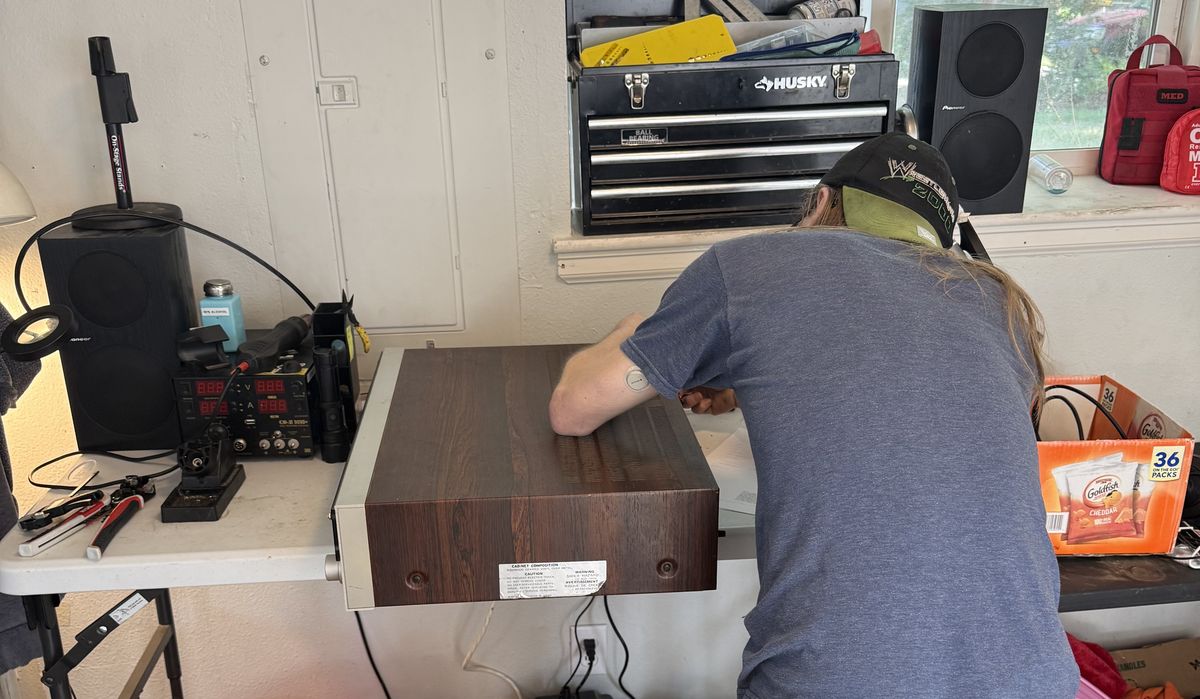
Workshop side total: about $2,850
The Stream, the hi-fi line designed at this bench. Your gift buys its first article: the first real, built, measurable circuit board.
$0 raised
The remote-control line. First article: fabrication, parts, and printed pieces for the first working unit.
$0 raised
Wall-i, the in-wall assistant. First article, at a $300 estimate until its own build sheet exists.
$0 raised
The open lane. Next hardware line, the tone box, the software push. Money lands where it's needed when the next thing is picked.
$0 raised
Simple doors
The simple doors first. Any amount backs the whole bench, from $1 up, and repairs money goes straight to the repair side. Locals can buy repair credit ahead of time with bonus built in: the day your laptop dies, the money is already down, and then some.
$50 gives $60
No expiration$50 buys $60 of repair credit.
$50 of credit for $50$100 gives $125
No expiration$100 buys $125.
$100 of credit for $100Redemption: show the receipt email at the shop, and the credit lands on your repair ticket.
Founding builders
Four lines, each with founding tiers at $50, $150, and $250. Hometech and remote tiers are whole units from the first run. Audio and future tiers are founding credit toward the first article. The $250 tier puts your name in the first run's silkscreen, twenty slots per lane, and each lane's tiers close for good when its first-run boards go to fab. Open a lane for its renders and tiers.
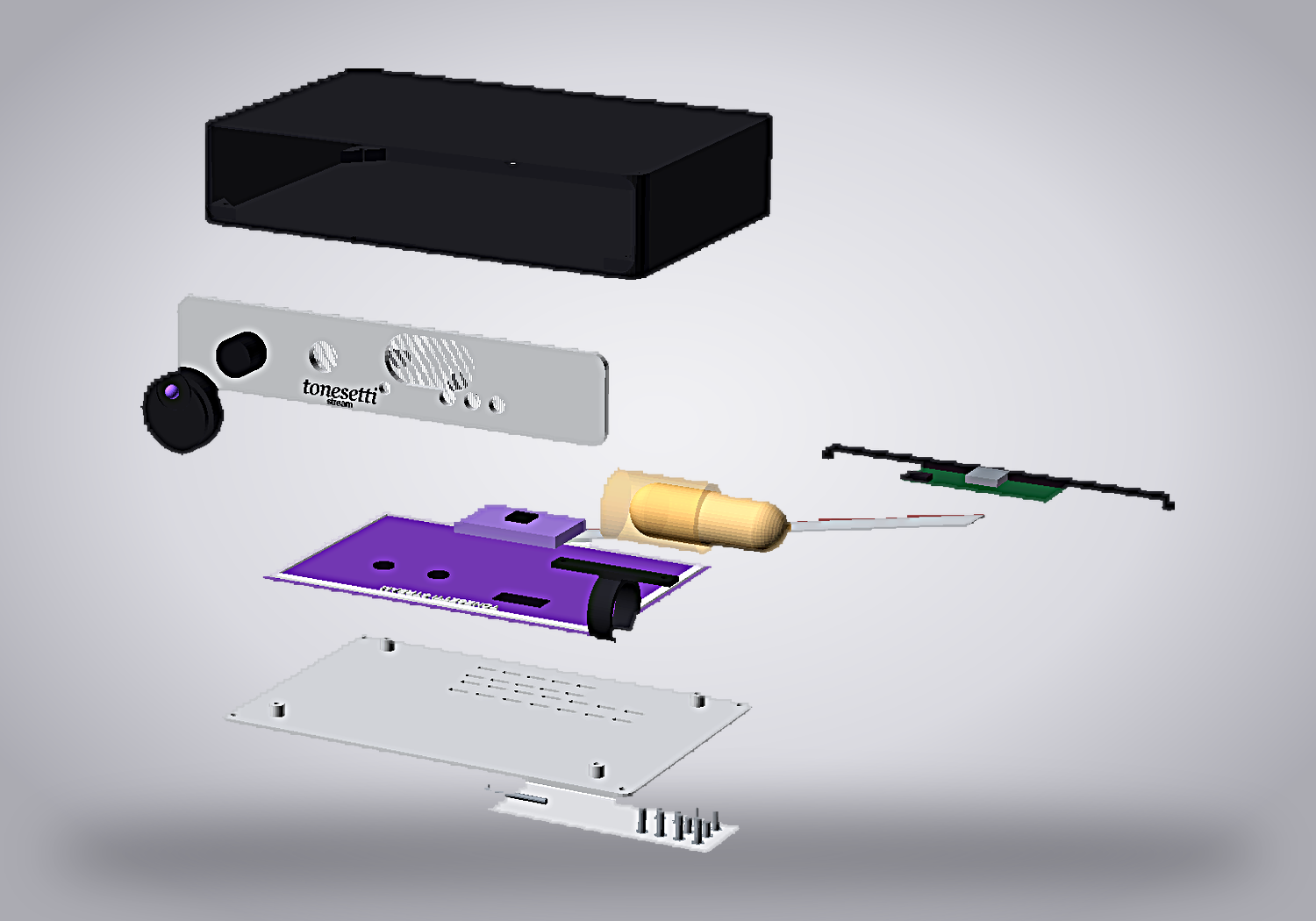
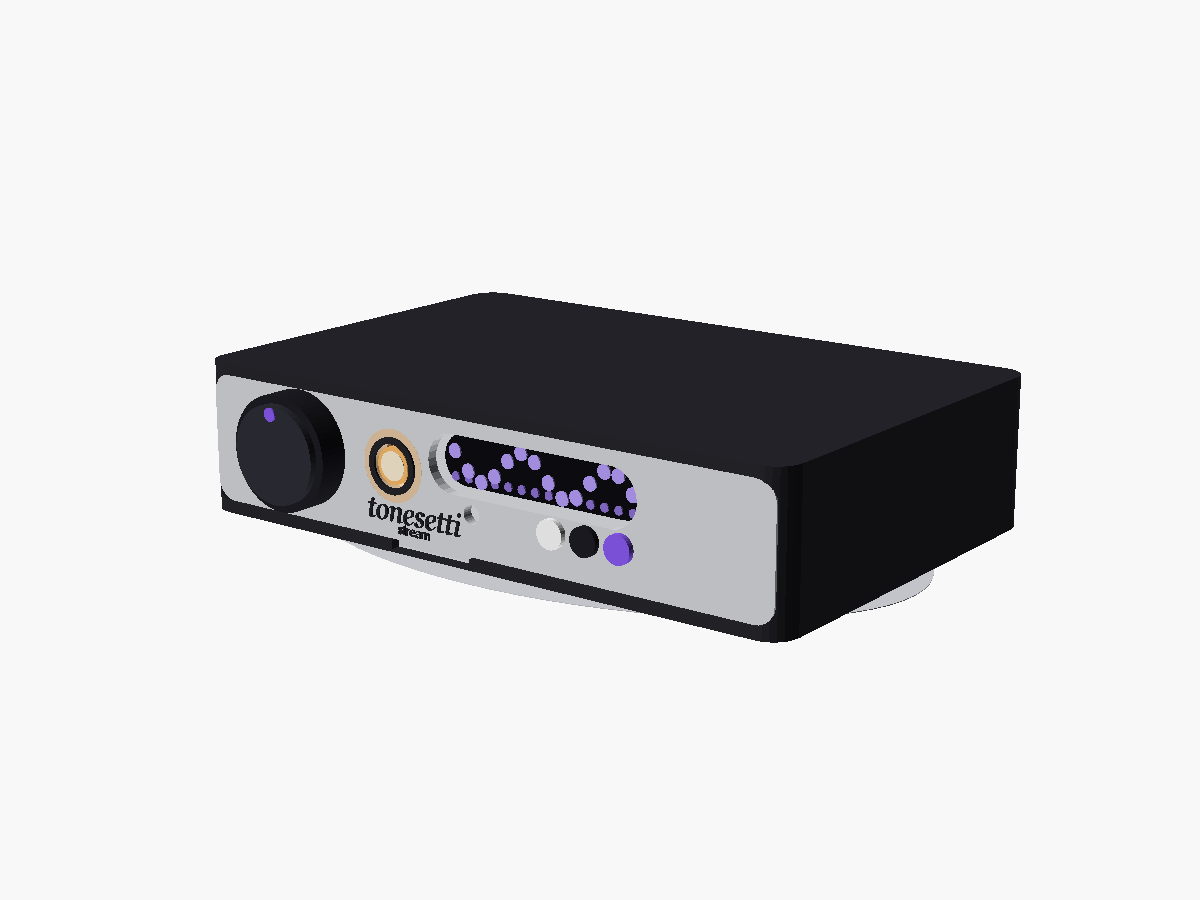
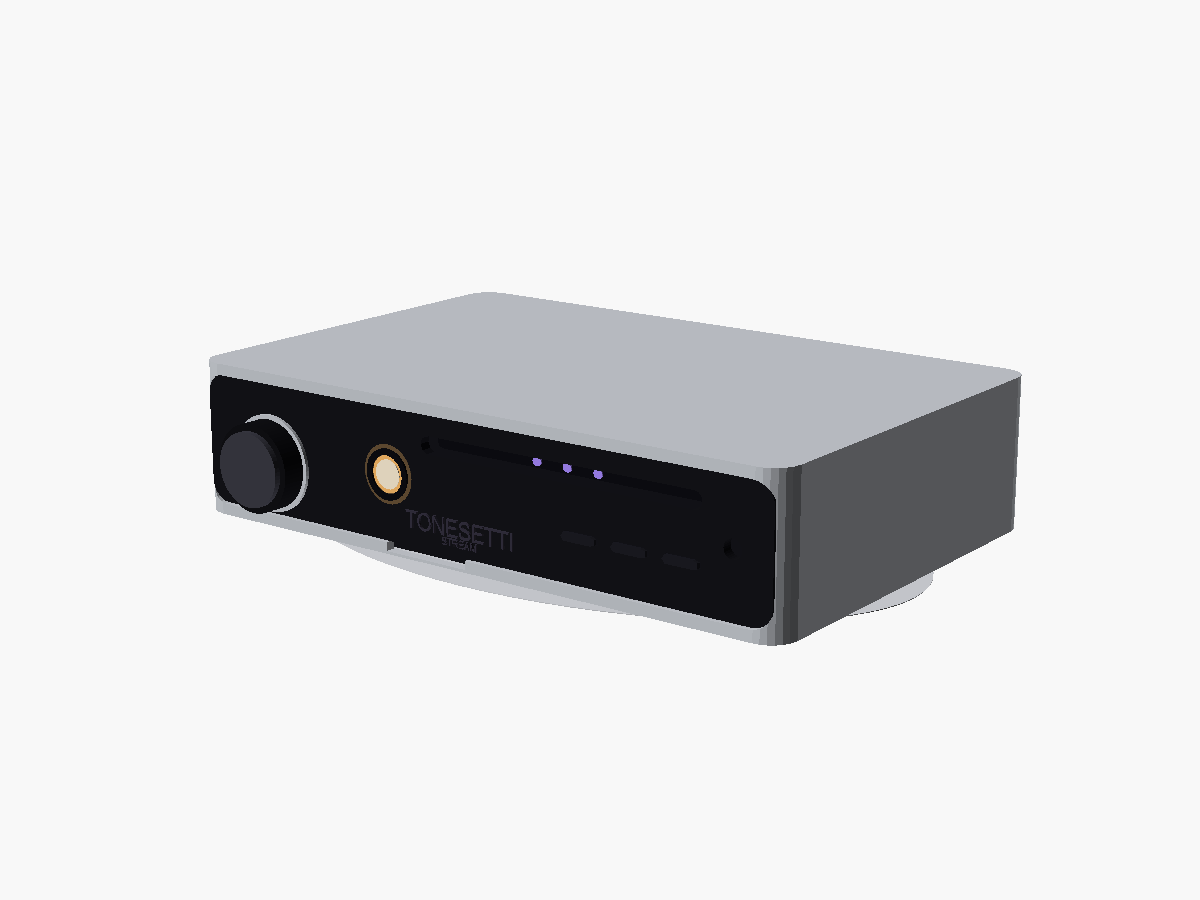
The Stream is a streaming preamp, the hi-fi line designed at this bench, and our first hardware line. Bright colorways and dark ones, same box either way: the bright faces wear the whimsy out loud, the dark ones hide it behind one thin line. The four knobs are press-fit and named, ORBIT, WAVY, FACET, GHOST, and they swap with no tools, because the knob is yours, not the factory's. The bottom plate comes off like a service tray, because we are also the people who would be fixing it.
$0 raised toward the first article
$50
Founding credit toward the first Stream unit, whenever it exists, plus a founding-builder spot on the audio lane.
Back this tier$150
Founding credit toward the first Stream, and your spot locked in ahead of the first fab run.
Back this tier$250
Your name in the first run's silkscreen 20 slotsFounding credit toward the first Stream, your name silkscreened onto the first production run of boards, and first pick when the line ships. Twenty spots, and this is the one the boards remember.
Back this tier Sold outThe remote line answers a wound: Logitech killed the Harmony remote in 2021, used ones trade at $150 to $300, and everything else is either $15 mush or cloud-tethered. This one is the last remote you buy, because it is the first one built to be fixed: one board, printed shells, and every part a customer might replace socketed, so a worn button is a ten cent part. Two AAA batteries from any gas station, and no app, no account, no cloud: it learns by watching your old remote. And every customer remote the repair bench captures grows the code database the product ships with.
$0 raised toward the first article
The remote line is at spec stage: no renders and no product page yet.
$50
A whole unit: the simple one, IR for the classics, buttons that feel like something. Founding price, founding spot.
Back this tier$150
A whole unit: the midtier, Bluetooth and voice on the same board as the flagship. Founding price, locked ahead of the first run.
Back this tier$250
Your name in the first run's silkscreen 20 slotsThe flagship with the screen, the Harmony-shaped answer, at founding price. When the line's funding allows it, yours gets upgraded to the later revision free. Twenty spots, your name on the first run.
Back this tier Sold out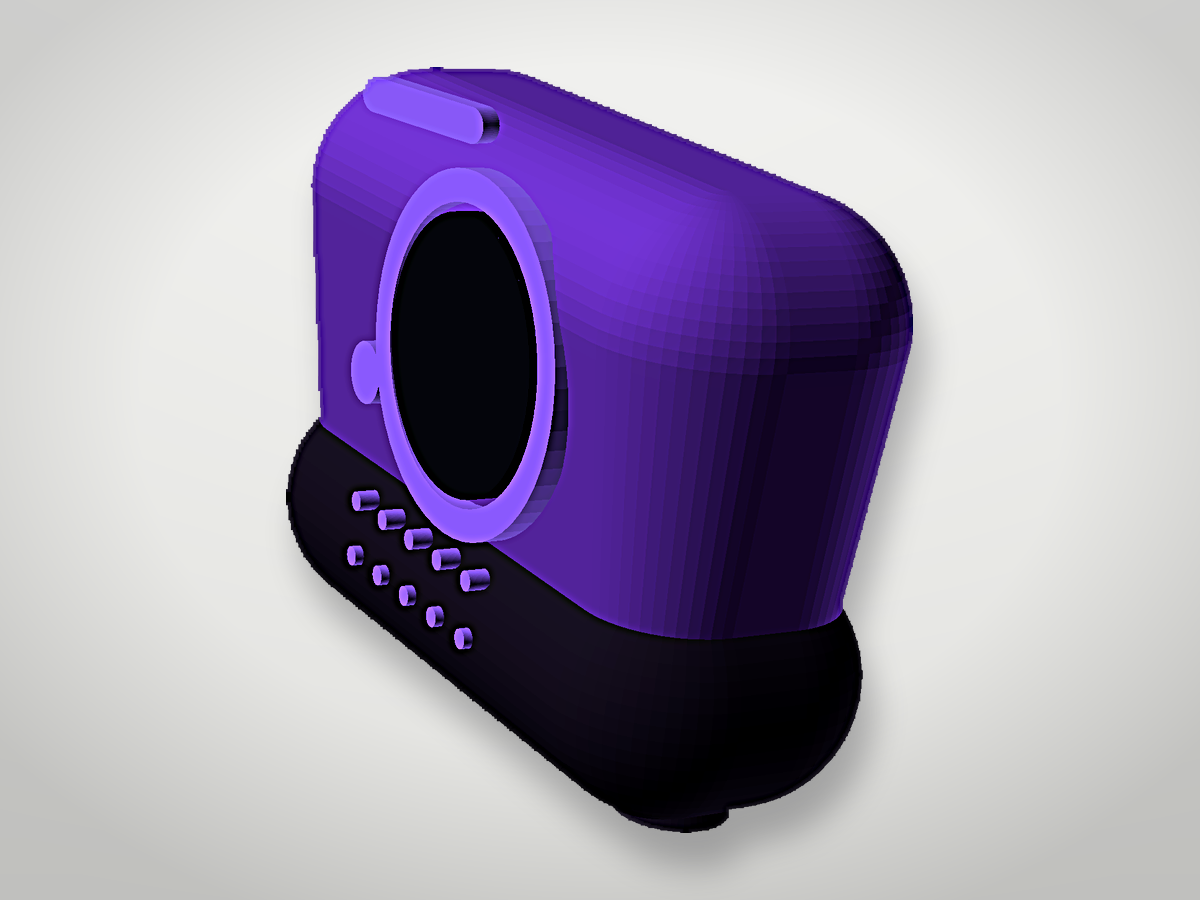
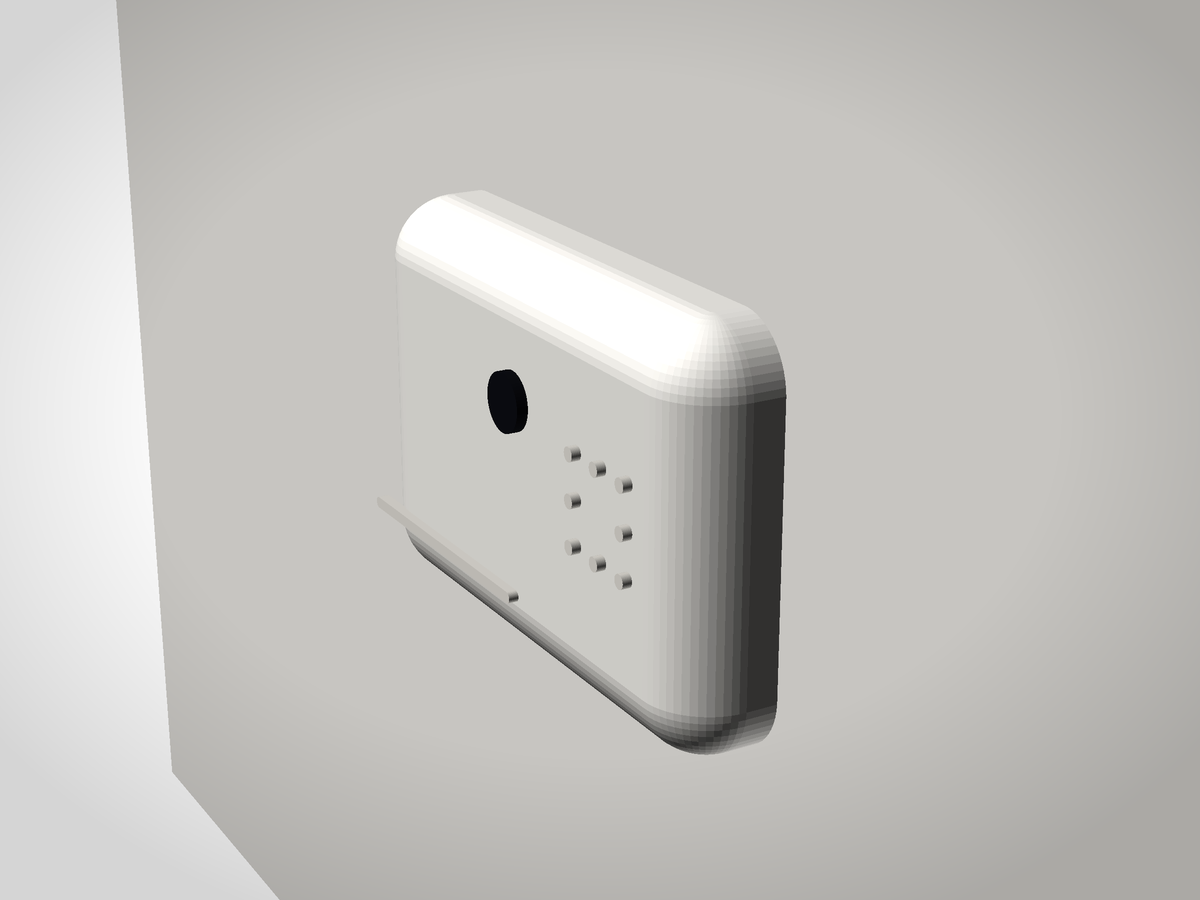
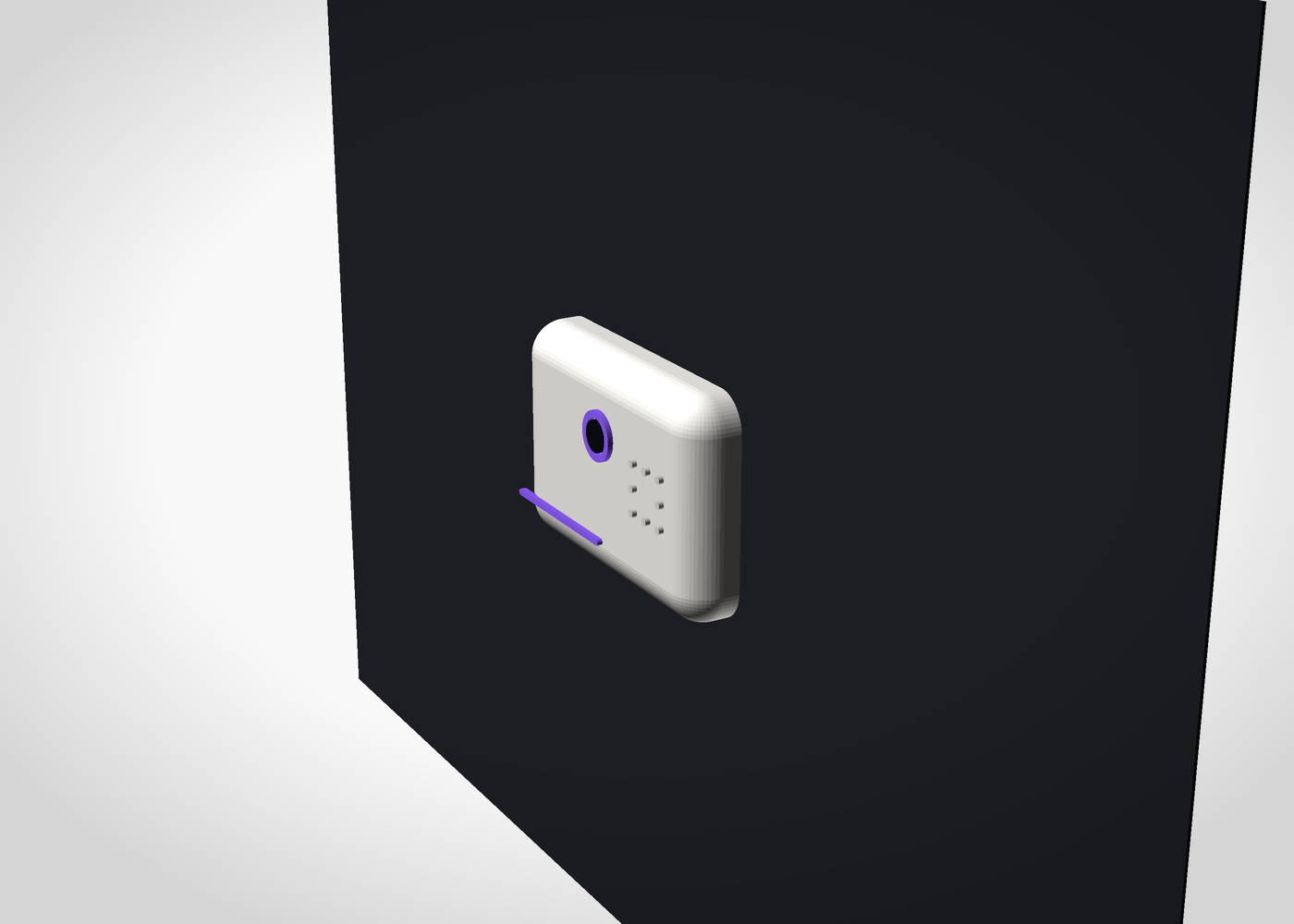
Wall-i is an in-wall line with a choice built in: Character sits on a shelf and has a face, Ghost hangs on the wall and disappears into it. Same brain in both, and you pick how it lives in your house. Ghost reads as architecture by day, and when the room goes dark its eye rings violet over a low line of light along its base. Nothing on it is glued shut: faceplate, board, cell, shell, backplate, screws, it all comes apart for repair. It is designed low voltage, nothing touches mains, the same safety doctrine the repair side lives by. Its first article is a $300 estimate until the line's own build sheet exists, and when that sheet is done, the number and this page both tell the truth.
$0 raised toward the first article
$50
A whole unit from the Wall-i line's first run: the entry unit, founding price, founding spot.
Back this tier$150
A whole unit: the mid unit of the line, founding price, locked ahead of the first run.
Back this tier$250
Your name in the first run's silkscreen 20 slotsThe flagship unit, your pick of Character or Ghost, at founding price. When the line's funding allows it, yours gets upgraded to the later revision free. Twenty spots, your name on the first run.
Back this tier Sold outThe future lane is the open one: money that lands where it is needed when the next thing gets picked. What is already on the drawing board: the tone box named in the funding plan, and the Tonesetti Bench, a desktop test instrument for audio that generates a signal, routes it, and shows you what your gear does with it. There is also the software push: the shop's booking system, phone assistant, and ticket paperwork are built in house, and the same bench ships StreamNest, the kidsafe streaming platform that is live today. Nothing in this lane is a promise: it is a pool with a name on it, and when the next thing is picked, this page says so.
$0 raised, any amount welcome
$50
Founding credit toward the next line's first article, wherever the open lane points.
Back this tier$150
Founding credit toward the next line's first article, spot locked in first.
Back this tier$250
Your name in the first run's silkscreen 20 slotsFounding credit plus your name on whatever the next line's first run turns out to be. Twenty spots.
Back this tier Sold outcan't give money?
The bench runs on rescued gear. Working or broken electronics, test equipment, tools, cables, components: if it might live again, we can use it. Email a photo to repair@tomasetti.shop or bring it by the shop. Gear donors land on the wall the same as money donors do. Right now the bench would especially love: test gear, a reflow oven, a retired but working server.
past the goal
Customers keep coming, and the bench keeps up. The thing the shop actually lacks is size: a counter you can walk up to, a window with the work in it, a sign over a door in Longmont. Past the $5,000 goal, the overflow fund has one name: the first Tomasetti Tech storefront. The number gets said when we have shopped the street for real. That is the dream this whole page is walking toward.
the fun prints
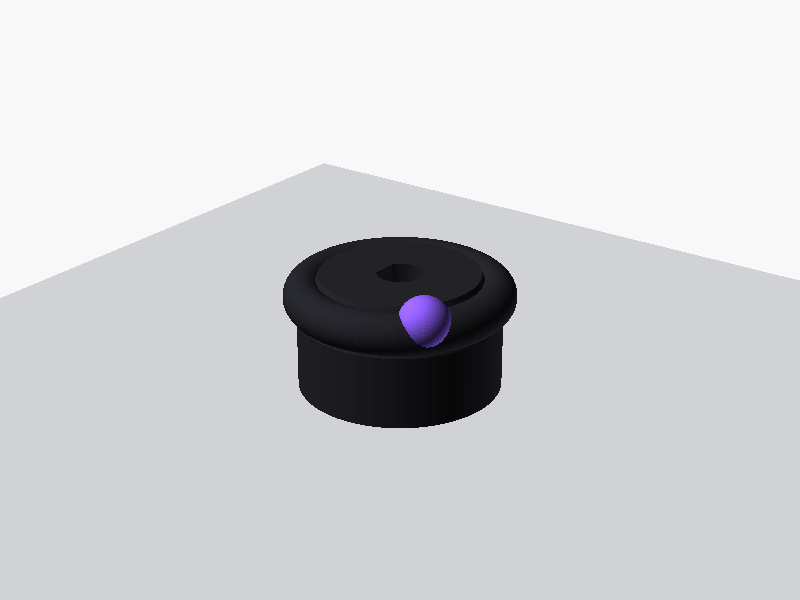
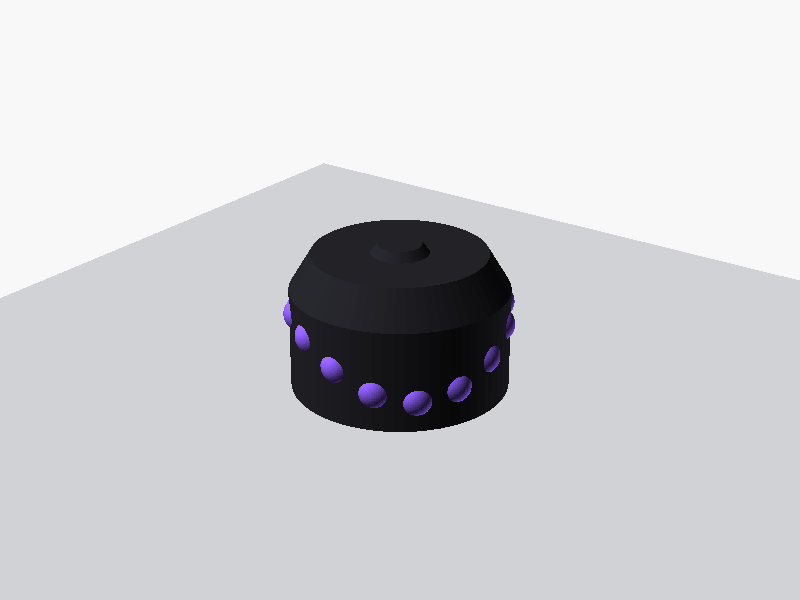
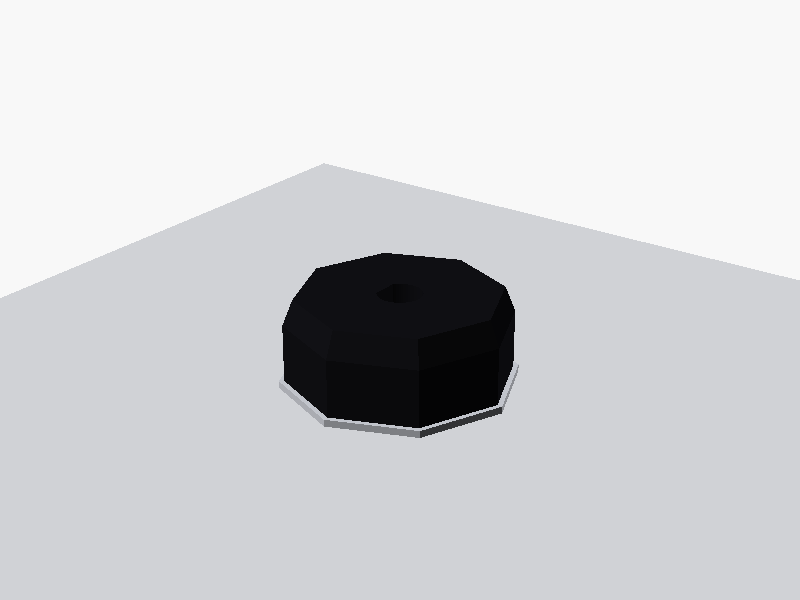
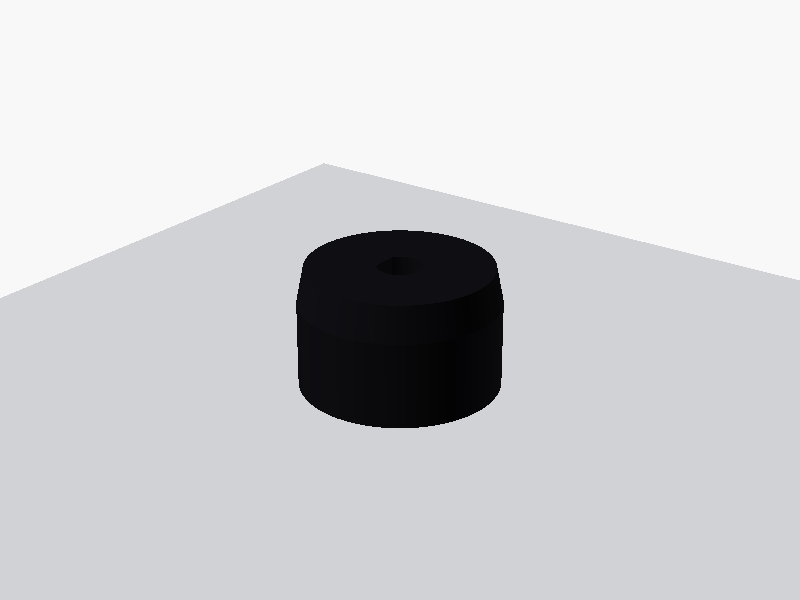
ORBIT, WAVY, FACET, GHOST. Four press-fit knobs, drawn at this bench, printed on the shop's own machine someday soon. Every board we make carries a doodle in the copper. It is house law: serious work, not serious faces.

the wall
Backers are listed by first name and last initial, like a plaque in a shop that knows its people. Say the word and you're off the wall entirely: opt-out is honored, no questions asked.
The first version of the wall is built by hand from receipts, updated alongside the totals.
questions
The answers, in plain terms.
No. This is not a charity and not a nonprofit. Tomasetti Tech is a for-profit business being backed by people who like what it does. Treat it like buying a friend's album, not like a donation receipt.
Into the lane you pick, toward the named rungs on the ladder. $120 is the workbench. $650 is the printer. $500 is the Stream's first board. Totals and lane splits update right on the page, dated to the latest count, and the bench log says what got bought.
Then your backing converts. Hardware credit becomes repair credit at the shop, at the amount you gave, and repair credit never expires. Anything outside that, contact the shop and we'll sort it out like people.
No. No expiration. Ever. The credit does not lapse while you wait for your device to break.
At the $250 founding-builder tier your name is printed in the silkscreen of that lane's first production run. 20 slots per lane, and the tier closes when the boards go to fab.
No. Every image marked design render on this page comes from our own CAD, drawn at this bench. They are what the lines are designed to be. Nothing has been ordered yet, and the page says so everywhere it matters.
The first real, built, measurable unit: boards fabricated, parts soldered, measured on the bench. A render becomes a product the day its first article works.
Because the answer to "nobody makes the good one anymore" is to make it. Every line on this page started as an annoyance at a repair bench: a remote that dies unfixable, an in-wall gadget glued shut, test gear that buries the number you need. We fix things for a living, so we design things that can be fixed. The shop is the first customer for its own tools.
The shop is real and public in Longmont, Colorado. Repair credit redemption is one email, and the shop page at repair.tomasetti.shop carries the hours and the door. If you are backing the bench and you are local, come drop off something broken and say hi.
the ask
Every dollar on this page has a named destination, and every dollar is traceable: Stripe tells us who gave, and the supporters get first look at what their money built.
Can't give right now? The list still helps.
We'll email you when there's news worth sending. Nothing else.